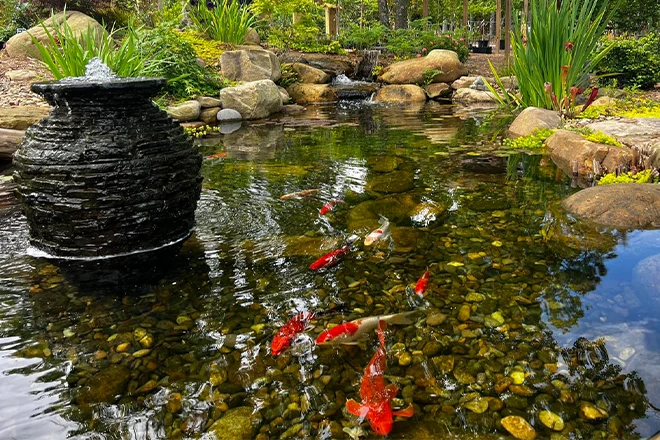
A healthy koi pond depends heavily on a reliable filtration system. Without proper filtration, waste can build up quickly and harm the water quality. Because koi fish live in the same water every day, maintaining clean and balanced pond water is essential for their health and well-being.
This guide explains the koi pond filters, why filtration systems are important, the different types of koi pond filters available, and how to choose the right size filter for your pond. With the right setup, pond owners can keep their water clean, clear, and safe for their koi.
Why Koi Ponds Need Filters
Koi fish spend their entire lives in the pond environment. Unlike natural lakes or rivers that constantly refresh their water, a pond is a closed system. This means waste from fish, leftover food, plant debris, and other organic materials can quickly build up if there is no filtration system in place.
Because of this, a filter is not simply an optional accessory. It is one of the most important components of a koi pond.
Many ponds already have filters installed, but sometimes they are not the correct size for the pond. When a filter is too small, it cannot handle the amount of waste produced by the fish. This can lead to poor water quality, unhealthy fish, and frequent maintenance problems.
Every koi pond should have a filtration system that is properly sized and capable of handling the biological load of the fish living in it. A well-designed filtration system helps keep the water balanced, reduces harmful substances, and supports a healthy environment where koi can grow and thrive.
Types of Koi Pond Filter Systems
There are several kinds of filtration systems available for koi ponds. Each one plays a different role in keeping the water clean and balanced.
One popular type of mechanical filtration uses sieve systems. These filters remove solid particles such as fish waste, leaves, and uneaten food before they break down in the water. By capturing these materials early, the system helps prevent them from turning into harmful substances.
Another modern option is the rotating drum filter. This system automatically removes small particles from the water using a rotating screen. When debris collects on the screen, the system cleans itself by spraying water to flush the waste away. Because it operates automatically, it requires less manual maintenance and helps keep the water consistently clear.
Bead filter systems are another common choice for koi ponds. These filters are similar in appearance to swimming pool filters and include a backwash function that allows users to flush out trapped waste easily. Inside the filter are thousands of small plastic beads that provide a large surface area. These surfaces allow beneficial bacteria to grow, which means bead filters can provide both mechanical and biological filtration.
Another important type is the biological filter. Instead of focusing on removing particles, this system provides a home for beneficial bacteria. The filter uses special media materials that offer a large amount of surface area where bacteria can grow and multiply.
These bacteria are responsible for breaking down harmful substances in the pond water. For biological filters to work properly, the media must allow good water flow and enough space so the system does not clog over time.
Biological Filtration vs Mechanical Filtration
Filtration systems for koi ponds generally fall into two main categories: biological filtration and mechanical filtration. Both types serve different purposes, and most ponds benefit from using them together.
Biological filtration relies on beneficial bacteria. These bacteria naturally break down harmful substances produced by fish waste and decaying organic matter. One of their most important roles is converting toxic compounds into less harmful ones. This process helps detoxify the water and maintain a stable pond environment.
Mechanical filtration works differently. Instead of using bacteria, it physically removes solid waste from the water. This includes fish waste, plant debris, uneaten food, and other particles that float or sink in the pond.
Mechanical filters improve water clarity by removing visible debris. However, they do not remove dissolved toxins. Harmful substances such as ammonia can still remain in the water even if it looks perfectly clear.
For this reason, clear water does not always mean healthy water. A complete pond filtration system should include both mechanical and biological components to ensure the water is both clean and safe for koi fish.
How to Choose the Right Size Filter for Your Koi Pond
Selecting the correct filter size is one of the most important steps when building or upgrading a koi pond.
A common recommendation is to choose a filter that is rated for at least double the size of your pond. For example, if a pond holds 1,000 gallons of water, the filtration system should be capable of handling about 2,000 gallons.
This extra capacity helps ensure the filter can manage the amount of waste produced by the fish. Koi fish are known for producing a significant amount of waste, especially as they grow larger.
The number of fish in the pond also affects the filter size. A pond with many koi will produce more waste than a pond with only a few fish. Because of this, filtration systems should always be selected with the fish population in mind.
In many cases, it is better to install a larger filter than what is strictly required. Oversizing the filtration system can improve water quality, reduce maintenance, and provide extra support as the fish grow.
The Importance of Aeration in a Koi Pond
Filtration alone is not enough to maintain a healthy pond environment. Oxygen also plays an important role in supporting the biological processes inside the pond.
Beneficial bacteria that break down waste are aerobic organisms, which means they require oxygen to survive and function properly. Without enough oxygen, these bacteria cannot effectively process harmful substances.
Adding an air pump to the pond helps increase oxygen levels in the water. Air pumps create bubbles that circulate water and provide the oxygen that bacteria and fish need.
Many ponds include waterfalls or fountains that naturally add oxygen to the water. However, these features are often not enough on their own, especially in ponds with many fish.
Installing a dedicated aeration system helps maintain proper oxygen levels throughout the pond. This supports biological filtration, improves water circulation, and creates a healthier environment for koi fish.
Conclusion
A well-designed filtration system is the foundation of a healthy koi pond. Filters remove waste, support beneficial bacteria, and help maintain clean and balanced water conditions where koi can live comfortably.
Understanding what includes on the koi pond filters, the different types of filtration systems, and how to choose the right size filter makes it easier for pond owners to create a stable and thriving aquatic environment.
By combining mechanical filtration, biological filtration, and proper aeration, koi pond owners can maintain clear water, reduce harmful substances, and ensure their fish remain healthy for many years.